


Create Recovery Environment with CBackup
With the Recovery Environment tool in CBackup, you can easily perform system backup restore or other backups restore operations when the system crashes.

by PublicOwin Lasted Updated February 6, 2026


The "Recovery Environment" in CBackup is a tool to help you create a recovery environment with CBackup. With the Recovery Environment tool, you can easily perform system backup restore or other backups restore operations when the system crashes.
Once the recovery environment is created and enabled, the "CBackup Recovery Environment" option will be added to the system boot menu page so that you can select to start the system from the recovery environment to restore images created by CBackup.
How to create recovery environment with CBackup
Step 1: Initialize Recovery Environment Tool
Download this software and install it on your computer. Click "Tools" in the left tab, and then select the "Recovery Environment" tool under "Common Tools".
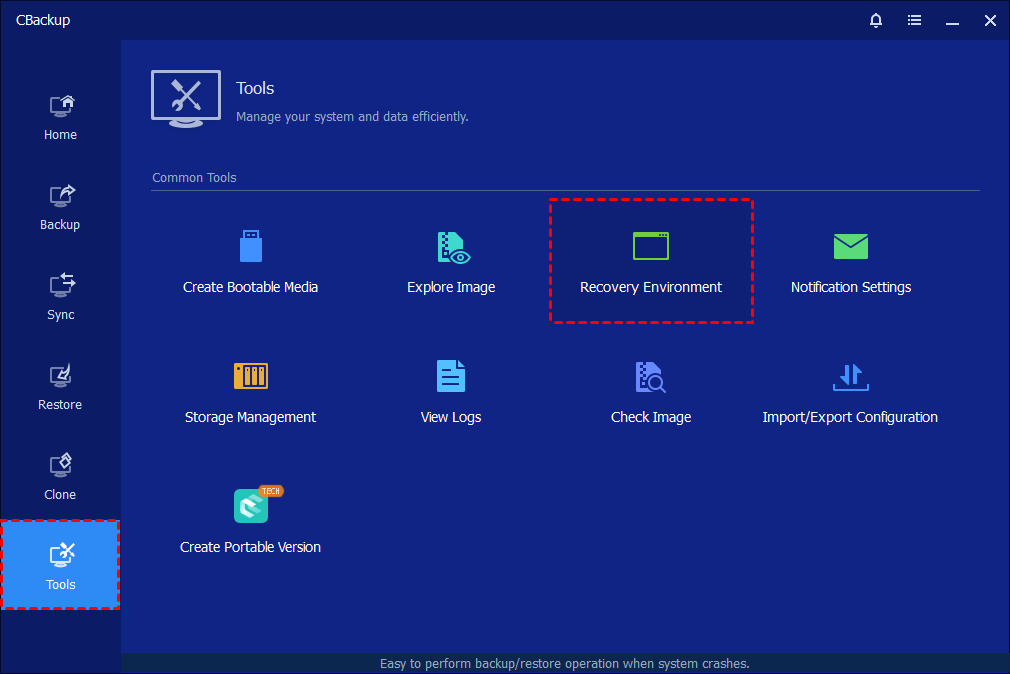
Then, it will enter the page of recovery environment settings.
Step 2: Enable Boot Option of CBackup Recovery Environment
In the "Recovery Environment Settings" page, tick the option "Enable the boot option of CBackup recovery environment" to enable the boot menu option of CBackup recovery environment.
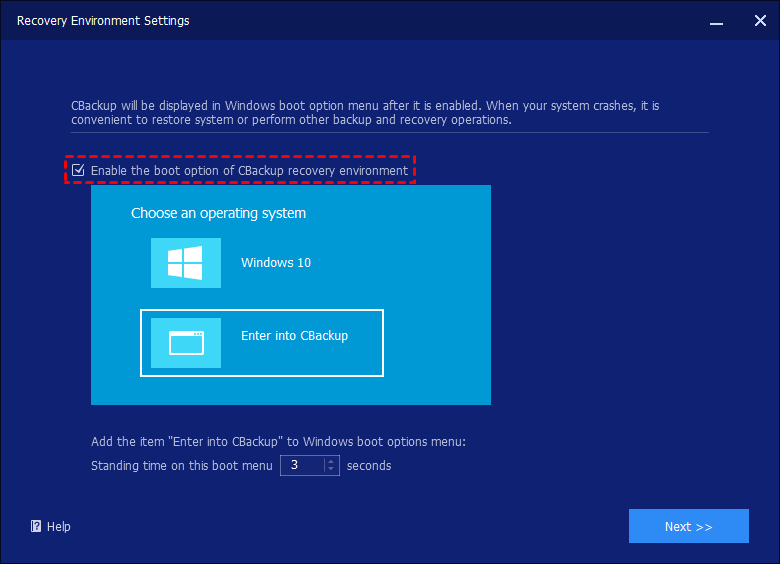
After ticking, the "Enter into CBackup" option will be added to the system boot menu page, so that you can select to start the system from the recovery environment.
Step 3: Set Standing Time of System Boot Menu
1. After the recovery environment is enabled, you can also set the standing time for the selection page of the system boot menu to facilitate selection on this page. (At least 1 second is required.)
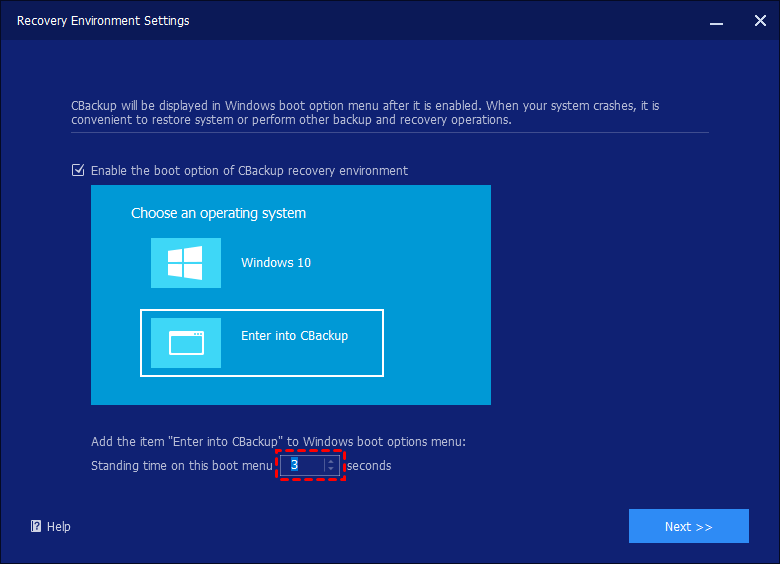
2. After the setting is complete, click "Next" in the lower right corner of the page to enter the page for creating a recovery environment.
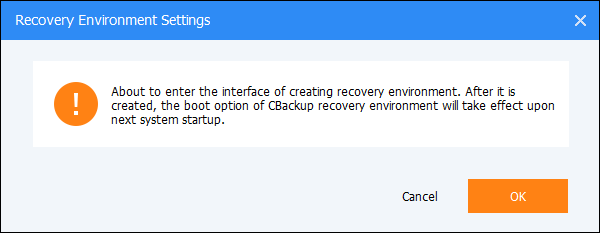
3. After the recovery environment settings are set, a confirmation window will pop up. Please click "OK" to continue.
Step 4: Monitor Creation Progress
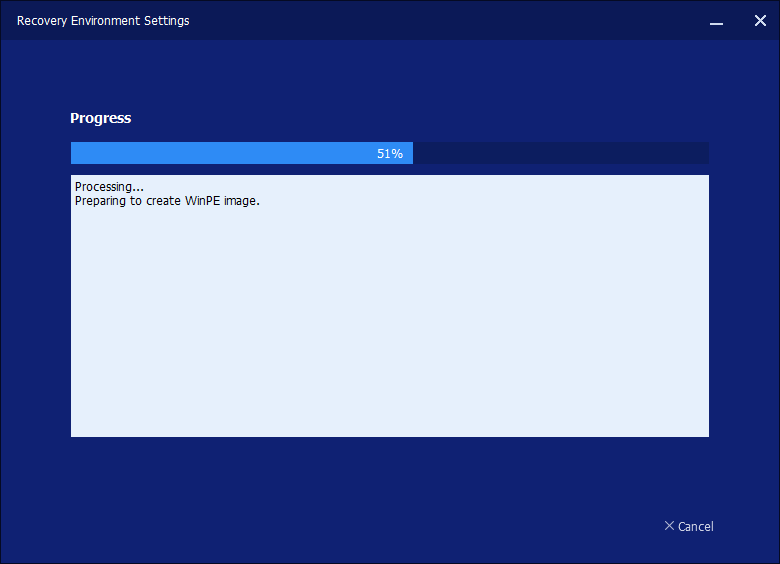
It will enter the page for creating the recovery environment. In this page, you can check the progress of creating the recovery environment and specific process information. You can click "Cancel" in the lower right corner to stop the process of creating a recovery environment.
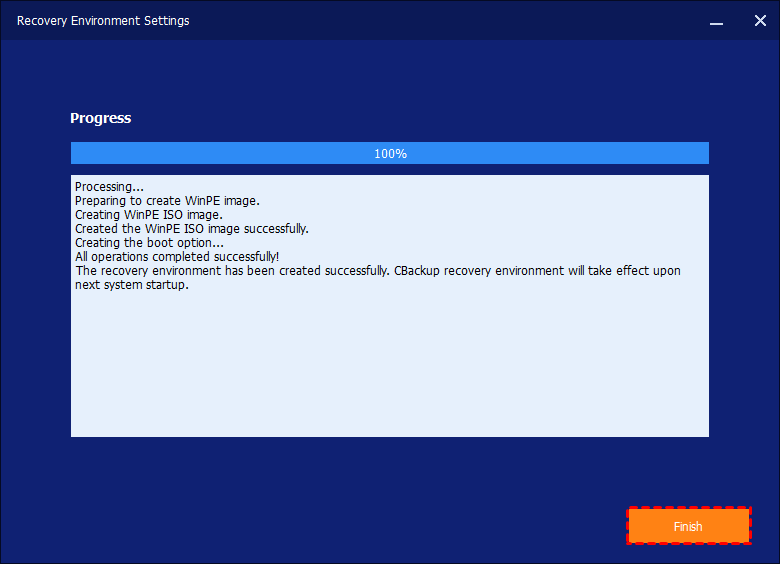
After the creation is successful, please click "Finish". And, settings will be saved. The CBackup system boot option will take effect the next time the system starts.
How to disable the recovery environment boot option
To disable the "CBackup Recovery Environment" option in the system boot menu options page, you can just load CBackup, click the "Recovery Environment" tool under the "Tools" tab, and then untick the option "Enable the boot option of CBackup recovery environment" and click "OK".
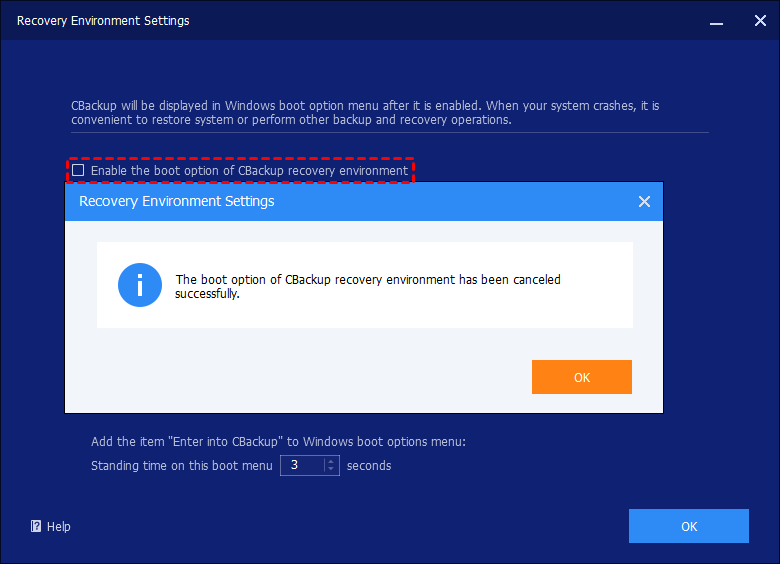
Then a confirmation window will pop up. Please click "OK" to disable the option.
Notes:
-
The tool currently does not support systems before Windows 7.
-
The tool currently does not support a dynamic system.
-
After the software is automatically updated or registered, it is recommended to update the recovery environment.
-
When the loss of the recovery environment is detected, it is recommended to update the recovery environment to ensure that the recovery environment is available.
-
The recovery environment created by CBackup is kept under the path C:\CBackup Recovery. If your C drive is wiped or damaged, please create a bootable media with CBackup and then boot your PC to restore your image under WinPE.
Conclusion
By creating a CBackup recovery environment, you can choose to enter the CBackup recovery environment to do a system restore when the computer boots up, so that the system restore operation can be done quickly and efficiently.
FAQs
Q: After creating a recovery environment using CBackup, I restarted my computer and found multiple blank boot entries when booting.
A: You can press Win+R and then run "msconfig" to open the system configuration window and click on "boot" to remove these blank boot options.
Free Get CBackup Now

Secure & Free